

Watching Great Spotted Woodpeckers
- madelaineinthewild5
- May 30
- 3 min read
Shy, tenacious and wearing a black and white tuxedo splashed with crimson, the great spotted woodpecker (Dendrocopos major) is one of our most recognisable birds. Bigger and more common than its close relative, the lesser spotted woodpecker (Dendrocopos minor), this iconic species has a knack for skilfully boring holes into the bark of trees to find insect larvae or sap, communicate with conspecifics (members of the same species), and even create nest cavities. That's exactly what I witnessed this May, in a special encounter with a woodpecker chick almost ready to fledge.
My local nature reserve, Tophill Low situated in East Yorkshire, is a haven this time of year. Bursting into life like spring is going out of fashion, the woodland canopy has exploded into a green oasis. Across the reserve, a male cuckoo delivers his characterful song, and numerous summertime migrants flit between the trees above, backlit by the scorching sun of a May bank holiday heatwave.
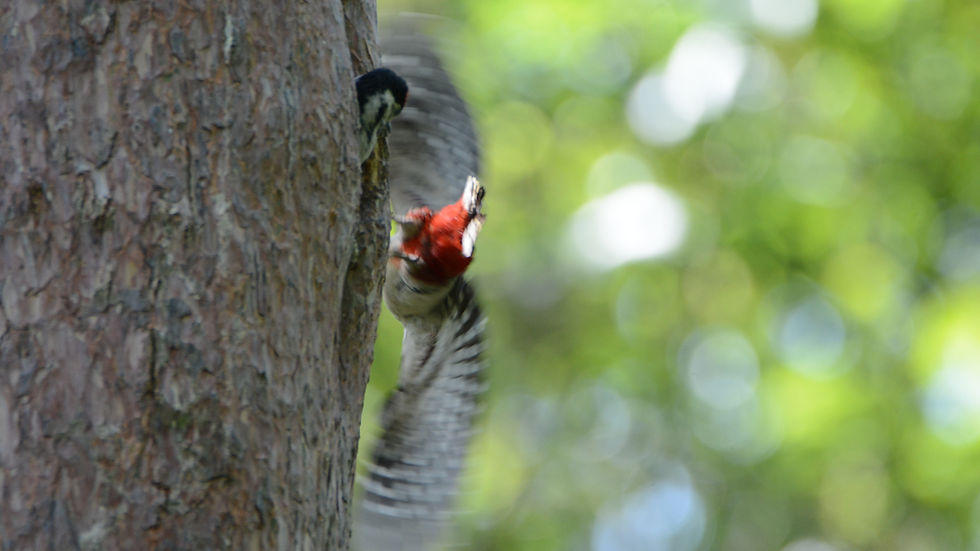
But something different draws me in today, found along a carefully-laid trail leading to a designated viewpoint. Metres up, a perfectly rounded hollow in the centre of the trunk - a great spotted woodpecker nest cavity. Already, I can hear the adult chattering from the surrounding trees, the young chick emerging halfway from the hollow as it calls to the parent bird. After a few moments, the adult arrives at the nest to provision the chick, its beak laden with insects in a long-awaited delivery.
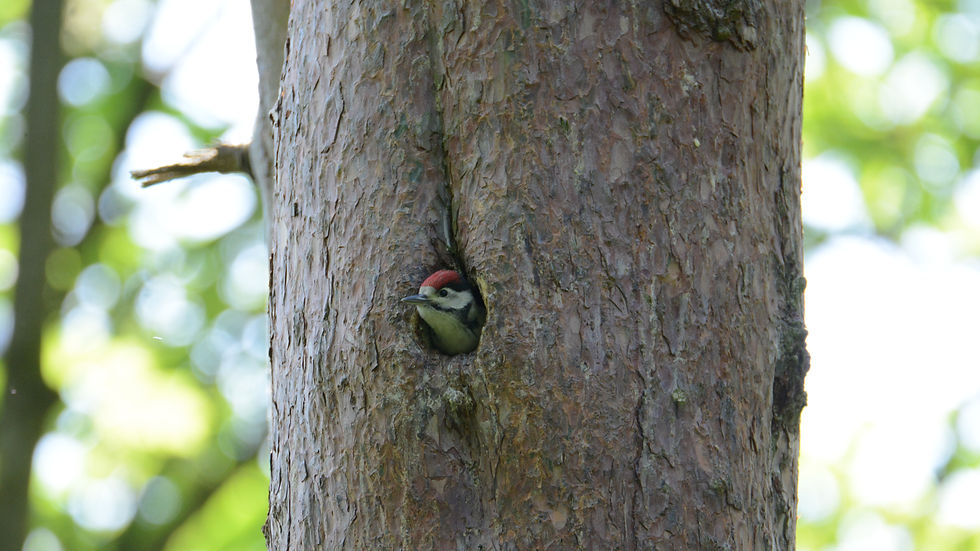
The adult bird is a male, the crimson streak across its nape my clue. It clings to the tree, with two backward facing claws on each foot helping secure its grip as it passes food into the chick's beak. Great spotted woodpecker chicks stay in the nest for roughly three weeks before fledging - this chick does not appear to be far off this milestone, though it will remain near its parents for perhaps ten days before becoming independent.

The female parent doesn't show while I watch from the viewpoint, but both parents are involved in parental care. I wonder if there are more chicks inside the nest, or if I'm actually watching multiple young swapping places without ever knowing. Perhaps there is only chick left. Either way, this glimpse into the early life of such a beautiful bird feels like a special privilege, and one that I am lucky to have photographed.
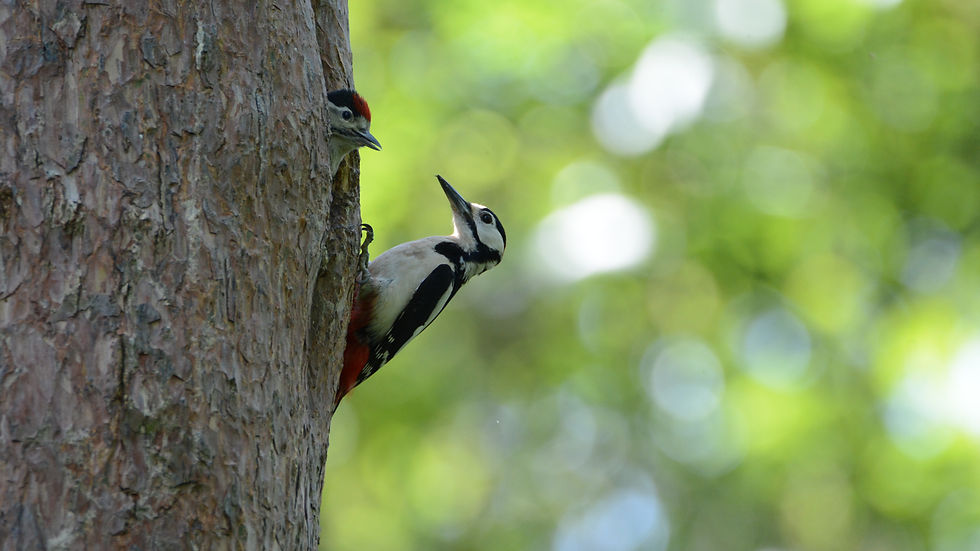
Eventually, I draw myself away, wondering what will become of this small chick. Perhaps one day it will establish its own breeding territory in these woods, or venture elsewhere to start somewhere new. Listed as Least Concern by the IUCN, the future of this species seems secure, but for the chick, only time will tell of its own success. For now though, safe, supported and thriving in this hollow cavity, its parents at its beck and call, it seems to be doing just fine.
About the Author:
Madelaine is a Zoology and Science Communication graduate, now working as a Guide at a BIAZA-accredited aquarium. Passionate about engagement with science and nature, and rediscovering a love of writing, she aims to document her experiences with the wild through blogs, wildlife photography, and tales of the natural world.


Comments